

SHARE:
Turn Assessment Results Into A Training Roadmap
Image Revamp helps HR teams interpret leadership assessment results, identify training priorities and build a practical development pathway for managers.
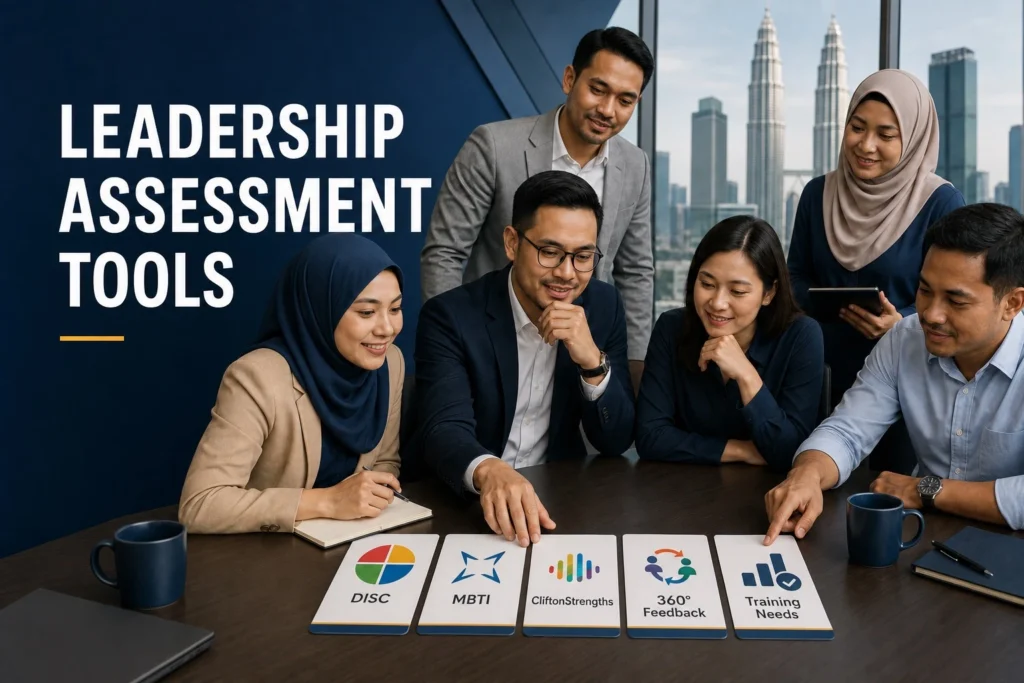
The best leadership assessment tool for managers is the one that matches the development problem you need to solve. DISC is useful for communication behaviour, MBTI-based workshops support personality-preference awareness, CliftonStrengths supports strengths-based leadership, and 360 feedback helps leaders understand how others experience their behaviour.
For HR and L&D teams, the assessment is only the starting point. The real value comes when the findings are translated into a leadership playbook, workshop design and manager behaviour changes.
What should a leadership assessment tool help managers do?
A leadership assessment tool should help managers understand a specific development pattern and take better action at work.
Good assessment-led development does not stop at a profile report. It should help managers make clearer decisions, adapt communication, understand team dynamics, improve self-awareness or identify development priorities.
Use a leadership assessment tool to support:
- Manager communication and feedback.
- Leadership self-awareness.
- Conflict and collaboration habits.
- Strengths-based role contribution.
- Training-needs diagnosis.
- Leadership coaching or workshop design.
Best leadership assessment tools by use case
Different leadership assessment tools are best for different manager-development use cases. Choose the development outcome first, then validate the tool against the audience and the action expected after the assessment.
| Tool | Best For | Use When | Route |
|---|---|---|---|
| DISC | Communication behaviour, feedback, delegation and conflict | Managers need practical language for adapting communication | View DISC |
| MBTI-based workshop | Personality preferences, working styles and self-awareness | Teams need deeper reflection on decision-making and team dynamics | View MBTI |
| CliftonStrengths | Strengths, talent themes, contribution and role alignment | Leaders need to understand natural contribution and underused strengths | View strengths |
| 360 feedback | Perception gaps, stakeholder feedback and leadership behaviour evidence | Leaders need input from managers, peers or direct reports | Discuss fit |
| Training-needs diagnostic | Leadership gaps, workshop priorities and business context | HR needs to decide what training should happen next | View all |
When is DISC the best leadership assessment tool?
DISC is the best leadership assessment tool when managers need to improve observable communication behaviour.
It works well for teams that struggle with feedback, delegation, conflict, meetings or cross-functional collaboration. DISC gives managers a simple language for noticing whether people need directness, discussion, stability, detail, speed or reassurance.
Choose DISC when the business problem sounds like:
- “Our managers communicate too differently.”
- “Feedback conversations become tense.”
- “Teams misread tone and pace.”
- “Delegation expectations are unclear.”
- “Meetings are either too direct, too slow or too vague.”
Explore Image Revamp’s DISC assessment for leadership communication, or use the DISC vs MBTI leadership-development guide if those are your final two options.
When is MBTI the best leadership assessment tool?
MBTI-based workshops are useful when managers need deeper self-awareness around personality preferences and working styles.
An MBTI-based approach helps leaders discuss how they gain energy, process information, make decisions and prefer structure. It can support leadership teams that need more empathy, better decision conversations and clearer understanding of different working preferences.
Choose MBTI when the business problem sounds like:
- “Our leaders do not understand each other’s working styles.”
- “People interpret differences too personally.”
- “Decision-making conversations become difficult.”
- “We need a reflective leadership-development workshop.”
- “The team needs language for personality preferences.”
Explore Image Revamp’s MBTI assessment workshop for managers and teams.
When is CliftonStrengths the best leadership assessment tool?
CliftonStrengths is useful when managers need to understand natural talent themes, contribution patterns and strengths-based leadership.
It helps leaders notice where they naturally create value, how they may overuse strengths and how team members can complement each other. CliftonStrengths can be especially useful for leadership pipelines, coaching conversations and team contribution mapping.
Choose CliftonStrengths when the business problem sounds like:
- “We want managers to use their strengths more intentionally.”
- “Leaders need better role alignment.”
- “The team does not understand each person’s contribution.”
- “We want a positive development language.”
- “Coaching conversations need a strengths-based foundation.”
Explore CliftonStrengths for leadership teams in Malaysia when talent and contribution are the main development questions.
When should HR consider 360 feedback instead?
HR should consider 360 feedback when leaders need structured input from the people who experience their behaviour.
Unlike DISC, MBTI or CliftonStrengths, 360 feedback does not primarily describe a style or preference profile. It gathers perception-based feedback from stakeholders such as managers, peers, direct reports or internal customers. This can help identify leadership behaviour gaps that the leader may not notice alone.
Use 360 feedback when:
- Senior leaders need perception data.
- Managers need evidence for coaching goals.
- Behaviour change must be tracked over time.
- The organisation wants multi-rater feedback, not only self-reflection.
If your team is comparing profile-based tools with multi-rater diagnostics, use the Leadership Assessments hub to discuss the diagnostic fit before choosing.
How to choose the right leadership assessment tool
Choose the right leadership assessment tool by matching the tool to the outcome, audience and next action.
Ask these questions before choosing:
- What leadership behaviour or team problem needs to improve?
- Does the team need communication language, personality insight, strengths insight or perception feedback?
- Will the assessment support a standalone workshop, coaching, team building or a longer training pathway?
- What should participants do differently after the session?
- How will HR measure whether the assessment led to useful change?
When the answer is unclear
Start with a training-needs diagnostic before selecting a tool. Image Revamp can compare assessment options and recommend a workshop pathway based on your team context.
FAQs
What is the best leadership assessment tool for managers?
The best tool depends on the development need. DISC fits communication behaviour, MBTI fits personality-preference awareness, CliftonStrengths fits strengths-based leadership, and 360 feedback fits perception-based leadership feedback.
Are leadership assessments useful for corporate training?
Yes. Leadership assessments are useful for corporate training when the results are translated into training priorities, leadership behaviours and practical workshop activities.
Should HR use DISC or MBTI for managers?
HR should use DISC when managers need practical communication language and MBTI when managers need deeper self-awareness around personality preferences and working styles.
Can leadership assessments be used for team development?
Yes. Leadership assessments can support team development by creating a shared language for communication, working styles, strengths, leadership gaps and team agreements.